

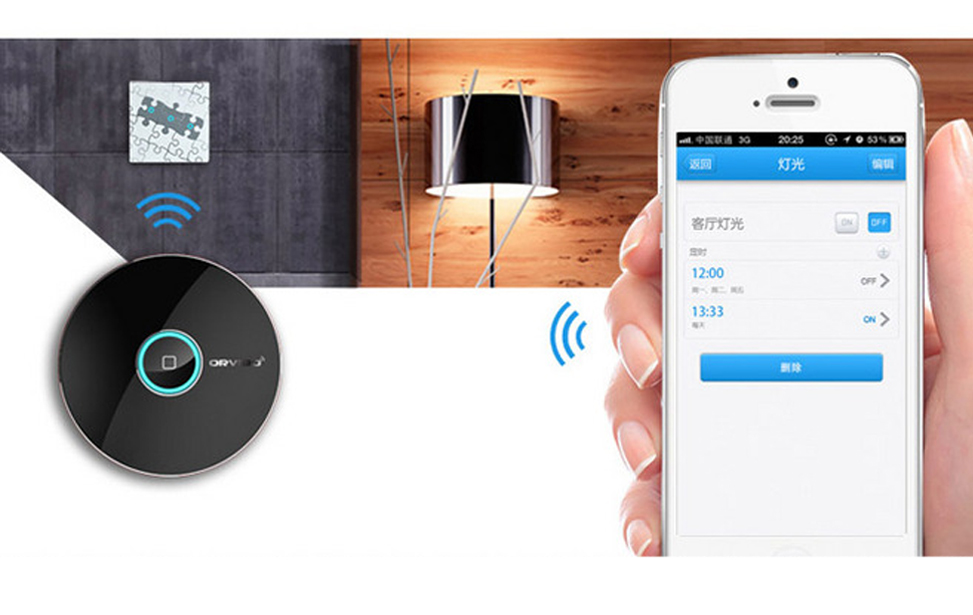
Today's product innovation places greater emphasis on interdisciplinary crossover, knowledge integration, and integrated innovation, and on turning it into something people use and own. Therefore, industrial design should aim at the international frontier, serve national strategies, and boost the regional economy.
Innovation does not mean being the best, but it definitely means being "different." Innovation creates product differentiation, and differentiation means business opportunities!
In the field of industrial design, standing at a new starting point in 2015 and facing opportunities and challenges, which way should we head? Here, I would like to discuss this with our readers.
Three Major Transformation Challenges
Amid the deep development of informatization and globalization, industrial design faces the question of how to transform and reform, with the main conflicts concentrated in three aspects.
Changes in the design environment. With economic globalization and the development of Internet technology, the environment facing industrial design has also changed: international corporations and well-known design institutions have entered China one after another, and domestic enterprises are working ever more closely with international design institutions and design masters; the importance of intellectual property has been raised to a higher level of requirement.
Changes in design objects. In the past, the objects of industrial design were mainly the appearance design of physical products, such as mechanical equipment, vehicles, and 3C products. With the rapid development of the Internet and mobile devices, IT companies represented by Apple introduced service design centered on content, and the objects of industrial design have shifted to non-physical digital products centered on content, human-computer interaction, and user experience, such as service design, software information architecture, and user interfaces.
A Shift in the Innovation Model. Industrial design in China mainly developed from art design, and traditionally emphasized product appearance design, which created a misunderstanding that appearance design equals industrial design and that innovation in industrial design means innovation in appearance. With the development of information technology, product competition has shifted toward integrated hardware/software competition: a product must not only have a beautiful appearance, but more importantly, excellent content. The emergence of models such as co-creation, crowdfunding, crowdsourcing, and co-sharing (the "4 Co" models) has greatly expanded and enhanced the space and potential for design innovation.
Three Transformation Directions
Faced with increasingly fierce competition in domestic and international markets and higher demands for product innovation, industrial design has also entered deep water and needs to adjust and upgrade itself. At the same time, today's product innovation places greater emphasis on interdisciplinary crossover, knowledge integration, and integrated innovation, exploring across boundaries new technologies, new forms, new services, and new designs, and turning them into something people can use and own. Therefore, industrial design should aim at the international frontier, serve national strategies, and boost the regional economy.
Targeting the Global Frontier
In a major strategy of the "High-Tech Strategy 2020" released by the German government in November 2011, it was explicitly stated that design is an important component of the self-regulating intelligent production systems formed under the Industry 4.0 strategy. A government report released by the White House Office of Science and Technology Policy in August 2013, "Supporting American Manufacturing with Industrial Design," also specifically emphasized the importance of innovative design to integrated innovation. Likewise, a government report released by the same office in August 2013, "Valuing the Art of Industrial Design," noted: "Industrial designers are not merely talents who add decorative content to others' inventions, but have emerged as one of the most active groups of inventors in this country. From 1975 to 2010, 40% of designers registered both design patents and invention patents, while only 2% of technicians registered invention patents and design patents." From Germany's Industry 4.0 to the Obama administration's emphasis on bringing manufacturing back to the United States, the important role of industrial design is evident.
Serving National Strategies
Some say that industrial design can cover everything from buttons to space shuttles. Looking back over more than 30 years of industrial design development in China, however, few projects have truly connected with major national strategic programs. Industrial design should serve national strategic needs and be involved in everything that flies in the sky, runs on the ground, and sails the seas. The state has identified seven industries as national strategic emerging industries: energy conservation and environmental protection, next-generation information technology, biology, high-end equipment manufacturing, new energy, new materials, and new-energy vehicles. Intelligent manufacturing is an inevitable trend in manufacturing development; at present, a new generation of robotics and intelligent manufacturing technologies centered on "human-machine integration," "artificial intelligence," and "smart manufacturing" is quietly driving a new round of industrial revolution, and intelligent design and Internet-based design will play an important role, in which industrial design should also be visible. In January 2015, the State Council issued the Notice on the Plan for Deepening the Reform of the Management of Central Financial Science and Technology Programs (Special Projects, Funds, etc.), whose Article 3, "Optimizing the Layout of Science and Technology Programs (Special Projects, Funds, etc.)," consolidates the science and technology programs (special projects, funds, etc.) managed by various central departments into five categories: the National Natural Science Foundation, National Science and Technology Major Projects, the National Key R&D Program, special programs (funds) for guiding technological innovation, and special programs for bases and talent. Industrial design should seize this strategic opportunity, play a greater and more extensive role in the new round of national science and technology policy adjustment, and make its own voice heard.
Boosting the Regional Economy. Industrial design is an applied discipline whose main battlefield is the market. China is a major manufacturing country, and industrial design has broad market space and potential. Zhejiang Province has a notably strong regional economy: Wenzhou's low-voltage electrical appliances, leather shoes, and water pumps; Ningbo's apparel, small home appliances, and equipment manufacturing; Yiwu's small commodities; Shaoxing's light textile industry; and Anji's bamboo industry and seating, with 13 demonstration bases for distinctive industrial design established in Zhejiang to boost regional economic development. All of this requires deep cultivation by industrial design. With the development of the Internet, IT companies such as Alibaba Group, Tencent, NetEase, and Baidu have an increasingly strong demand for interaction design, user experience design, and service design, and industrial design has changed considerably as well. Industrial design should not follow a uniform model but should develop in a diversified way, with a hundred flowers blooming and each area forming its own characteristics.
Product Is King
Product, product, product!
In recent years, new names and new concepts such as Internet thinking, business models, Industry 4.0, innovation design 3.0, interaction design, user experience design, and service design have emerged one after another, dazzling observers. Some veterans of industrial design even say they are lost now and no longer know what industrial design should do. In fact, no matter how the world changes, one thing remains unchanged: industrial design always takes products as its object, and this object includes not only what we call physical products but also non-physical products. Product is king; talking about culture, brand, experience, emotion, or Internet thinking without products seems to be building castles in the air.
In this new period, industrial design should not only provide good design services for "others," but more importantly, take the lead itself: independently develop products, build its own brand, cooperate with others, and create new business models. This is the real path to long-term development. Providing good design for "others" is certainly important, but that design always belongs to someone else; industrial design only receives a modest design service fee, cannot participate deeply, and cannot capture the greatest profit from marketing. Zhejiang Province, as one of the provinces and regions with advanced economy, manufacturing, and industrial design in China, should lead the country.
Who am I? What do I have? These are questions that industrial design companies and designers should constantly ask themselves. "Hardware-software integration + APP" may be a path for the development of industrial design itself in the Internet era.
"Ever-new products keep a company evergreen." The times keep advancing, and only through innovation can a company keep developing and progressing. Industrial design, as the bridgehead of innovation, should play a leading role. Through design we should lead trends and consumption, create new lifestyles and experiences, create new business models, and pursue Leading Design. This has always been an unchanging theme for many companies. If we merely aim to satisfy customers, earn a small design service fee, and do Following Design, we will only limit our thinking, stand still, and bind our own hands, making it hard to create satisfactory or "eye-catching" new products, new experiences, or new services.