

Top 10 IoT Predictions for 2018
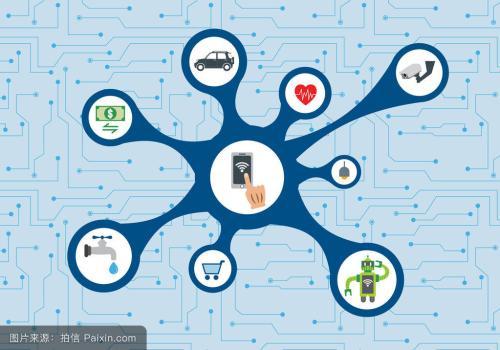
According to Forrester Research, IoT will become a pillar of customer value, with infrastructure shifting to the edge and dedicated IoT platforms. Security remains critical. Forrester's top IoT predictions for 2018:
1. Enterprises will step up pilot efforts and roll out voice-based services to consumers
In 2018, Fortune 500 companies will keep improving the complexity, breadth, and quality of voice IoT services, and the number of such services launched by these enterprises may double. Financial services and other industries that require identity verification may lag behind.
2. Europe will issue new guidelines to promote commercialization of IoT data
45% of US enterprise data and analytics decision-makers say they have already monetized data, while the figures for French and German enterprises are 35% and 38% respectively. Given this relatively lagging performance, the EU will issue guidelines to encourage enterprises to adopt advanced technologies and stimulate the data economy.
3. Marketers will recognize IoT opportunities while wearables remain niche
As more and more devices adopt intelligent agents such as Amazon Alexa or Google Assistant, marketers will seek new ways to engage customers. To deliver a more approachable brand experience, marketers will expand their "mobile first" strategy to include new interfaces with smart home speakers or smart watches. According to Forrester, although cumulative US smart watch sales will exceed 12 million units by the end of 2018, wearables will remain a niche product.
4. Key Use Cases Will Drive the Deployment of Edge Solutions
At present, IoT business processes are mainly used in local data centers or cloud services. It is predicted that in 2018, more and more enterprises will deploy IoT-enabled business processes. Edge IoT devices can operate locally based on the data they generate and leverage the advantages of the cloud to ensure security and achieve scalability.
5. Builders of industrial IoT platforms will exit the IaaS (Infrastructure as a Service) business
Over the past twelve months, all major Industrial IoT (IIoT) platforms have been delegating some industry- or IoT-specific functions to hyperscale cloud providers (including AWS, IBM, and Microsoft). As these cloud providers continue to expand the geographic reach of their services, this trend will accelerate in order to meet stringent regulatory requirements and enhance IoT capabilities.
6. IoT platforms will begin to focus on designing and operating scenarios
Product designers who integrate IoT into products and experiences need the ability to remotely manage, monitor, and control products. IoT business operators need to design software that integrates various IoT-enabled assets into coherent business processes, so they can focus on business operations rather than manually managing IoT assets. Therefore, IoT business operators will choose the IoT platform that best fits their needs.
7. Developers that value the edge will drive consolidation of IoT platforms
More and more enterprises are pushing data processing and analysis to the network edge to lower data acquisition costs and reduce network latency. If IoT platforms only provide services at the network core, acceptance of such platforms will steadily decline. Supporting the edge with a consistent programming and analytics model requires high expenditure, which will overwhelm IoT platform providers and wear away their confidence and grand ambitions. Predictions suggest that such providers will exit this market within the next three years.
8. Developers will integrate devices through public cloud platform services
Developers require low adoption costs, rapid prototyping, global coverage, easy integration with systems of record, and minimal maintenance burden, which will drive them to the IoT platforms offered by public cloud providers.
9. IoT will face larger-scale and more destructive cyberattacks
Although IoT security awareness continues to grow, customer experience, cost, and time-to-market requirements still take priority over security requirements. This makes implementing strong security controls a challenge or, worse, leaves specific security features out of the final product deployment. Hackers often try to infect systems to extract sensitive data, and next year may bring more IoT network attacks targeting endpoint devices and cloud services.
10. IoT Adoption Based on Blockchain Will Rise to 5%
Because large-scale deployments require reliability and stability and seamless integration with existing technology infrastructure, blockchain is not yet ready to meet such deployment requirements. However, promising pilot projects will emerge next year, and the maturity of IoT and blockchain technologies and products will increase blockchain adoption in 2018.
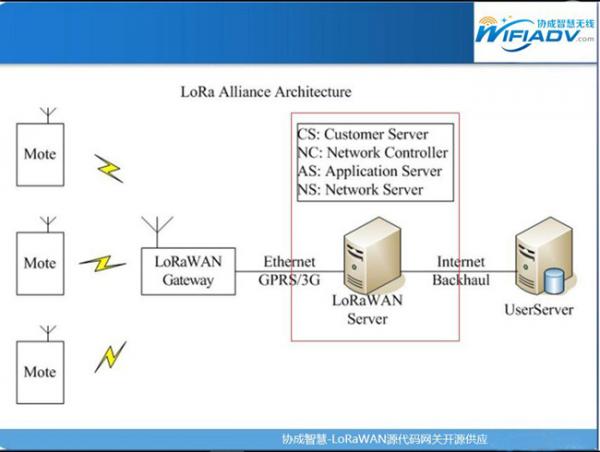
At present, compared with NB-IoT, LoRa is the most mature and stable narrowband IoT communication technology, and its freely formed private network is far superior to the NB network for which carriers charge continuously; moreover, LoRa requires no further payment once the network is set up. However, developing IoT communication with LoRa is difficult, takes a long cycle, and has a high entry barrier. It is understood that, to lower the entry barrier for IoT entrepreneurs, Xiecheng Smart provides a complete set of mature LoRaWAN source code plus LoRa Gateway customization solutions, greatly reducing the six-month cycle and huge development cost that entrepreneurs spend on getting IoT links working, making it easier to quickly enter specific IoT applications and build their own independent IoT operation brands.