

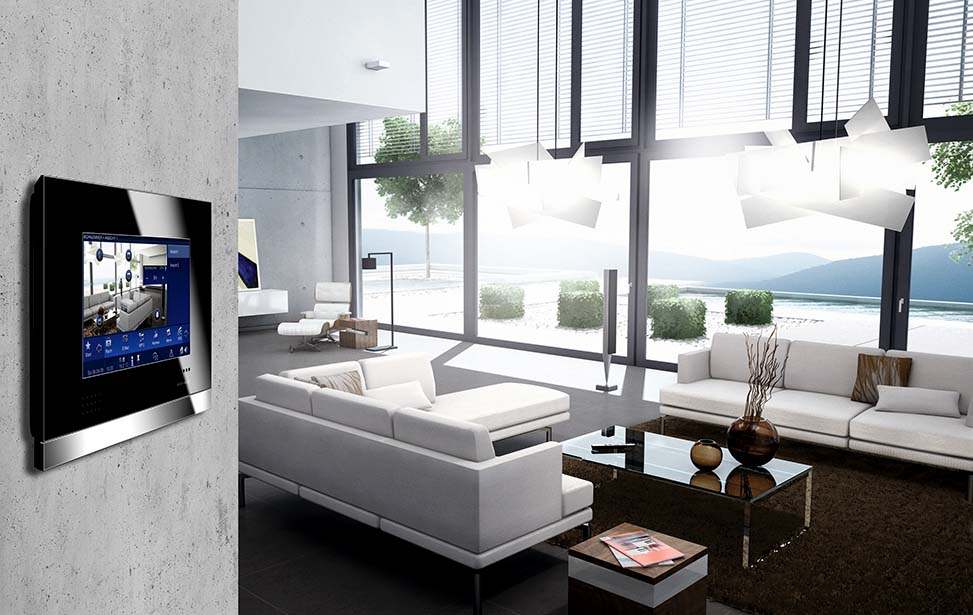
After a year of buzz, where will smart homes go in 2015? In late October last year, the well-known foreign technology website Gigaom laid out the direction of smart home development in 2015: "Bluetooth makes lighting control simpler; talk to your home through your phone; low-power WiFi is coming, even though the standards are not yet ready; home automation is possible without a central hub." These four directions are certainly worth watching, but several changes that may take place in smart home development are equally hard to ignore.
Easing Competition in Communication Standards
In the past two years, the smart home industry still believed that "whoever owns the standard owns the world," but this year that situation will change. Communication standards are an important measure for addressing the "fragmentation" of smart home and play an important role in connecting multiple types of devices, but as technology continues to mature, competition among various communication standards will gradually ease. Among these technologies, wired technology is safer and more stable, wireless technology is more convenient and easier to expand, ZigBee is relatively reliable, and WiFi, Bluetooth, and Z-Wave each have their own advantages and features; therefore, there is little point in insisting on vigorously promoting one technology as superior, especially since consumers value products rather than technologies.
Prices are gradually declining
Are smart home products too expensive? That is indeed a problem, but it is only a problem of the past, or rather a problem of clinging to high prices for certain products; for smart homes, falling prices in 2015 are the mainstream trend. In fact, a well-known domestic smart home company has already set an example: since early February this year, the company has been using its "Giant Wave" campaign to prove to consumers and the entire industry that smart home prices can be very low, as low as ordinary household goods, and that so-called high prices are gradually fading away.
Diversified Control Methods
Mobile phones are the control and management method for smart home, but if a product's control method is confined to the phone alone, it may soon face the risk of being phased out, because starting in 2014, smart home began to shift from single-phone control to integrated methods such as voice, gestures, watches, and rings; therefore, in 2015 smart home control methods will become diversified. Of course, large companies played an important role in this process; for example, internationally renowned companies such as Apple, Google, and Microsoft have all contributed to advancing voice control for smart home.
More Diverse Entry Points
Since the mid-1980s, smart home has developed for three decades, yet many people still do not know how to get started. At first the reason may have been that there were few smart home entry points, leaving users unsure where to begin; today it may be that entry points come in so many forms that choosing becomes difficult. In early 2014, the smart home industry was still locked in debate over standalone products versus systems, and after Apple launched HomeKit in June, the smart home platform again became a focal point. This year, as smart life solutions gained popularity at AWE2015, smart modules are also set to become an important entry point for companies entering the smart home industry.
In 2014, many changes also took place in the smart home sector, but they mainly remained at the penetration of Internet companies, home appliance manufacturers, and other enterprises into the smart home industry. By contrast, the changes in smart home in 2015 will focus more on smart home itself, which will help drive the popularization of smart home, and smart home will become increasingly down-to-earth. Of course, this does not mean that, amid constant changes over the year, smart home will become flawless; in fact, issues in hardware, software, functions, control, user experience, and other aspects still need attention.